
LOUISVILLE HISTORIC & RESIDENTIAL CRAFT
Masonry Repair Louisville
Homeowners Trust
Small cracks and crumbling mortar don't stay small - Louisville's freeze-thaw winters make sure of that. We diagnose the real cause and fix it, not just patch what's visible.
Direct on-site diagnosis · Licensed & insured Louisville masons
FIELD DIAGNOSTICS : LOUISVILLE, KY
Signs Your Masonry
Needs Attention
Signs that masonry needs repair include visible step-cracking along mortar lines, crumbling or powdery joints, chalky white salt deposits (efflorescence), and outward bowing or displacement of brick and stone walls across Louisville residential and historic structures.
Kentucky's intense seasonal freeze-thaw cycles trap moisture behind aging lime and cement binders. When left unaddressed, minor surface degradation quickly compromises the structural integrity of chimneys, foundations, and load-bearing brickwork throughout Jefferson County.
1. Visible Diagonal & Step Cracking
Stair-step fissures running through mortar beds indicate differential foundation settling or severe thermal movement. Cracks exceeding 1/8-inch allow water intrusion directly into the structural core.
2. Crumbling & Powdery Mortar
Mortar that flakes away under light fingertip pressure has lost its hydraulic binder. Without fresh, formula-matched tuckpointing, exposed masonry units begin spalling and bearing uneven mechanical loads.
3. Efflorescence & White Salt Staining
White powdery residue staining masonry faces occurs when moisture migrates through porous brick and evaporates, depositing dissolved mineral salts. It confirms continuous active water penetration behind the wall facade.
4. Outward Bowing & Bulging Walls
Sections of brick or stone pulling away from structural framing signal failed wall ties, severe moisture expansion, or foundation subsidence. This requires immediate structural stabilization to avoid localized collapse.
FORENSIC MASONRY DIAGNOSIS
We Diagnose The Cause,
Not Just The Symptom
Surface patching without investigating subterranean moisture or settling is a guaranteed recurring expense. In Kentucky clay soils, mortar cracks are rarely isolated cosmetic failures.
THE VISIBLE MANIFESTATION
The Symptom
What most homeowners notice first: stair-step hairline cracks across mortar beds, crumbling joint powder on patios, efflorescence mineral crusts, or spalling brick faces popping loose.
- Surface caulking traps moisture behind the brick veneer
- Over-the-counter mortar mixes lack historic aggregate flexibility
- Patch jobs pop out after a single Ohio River Valley freeze cycle
- Hides ongoing foundation migration behind cosmetic smear layers
THE STRUCTURAL MECHANISM
The Root Cause
What our evaluation actually targets: subsurface hydrostatic pressure, gutter outfall saturation, expansive heavy-clay soil shifts, and thermal movement along unbonded masonry corners.
- Laser level verification of foundation and lintel deflection
- Soil moisture gradient and downspout discharge tracking
- Mortar type specification matched to historic kiln hardness (Type N vs O)
- Subsurface drainage and structural relief path planning
Thorough on-site structural evaluation across Jefferson County and Greater Louisville.
SPECIALIZED RESTORATION DISCIPLINES
Targeted Masonry
Solutions
Dedicated repair scopes engineered for Louisville's regional brick, mortar, and stone assemblies.
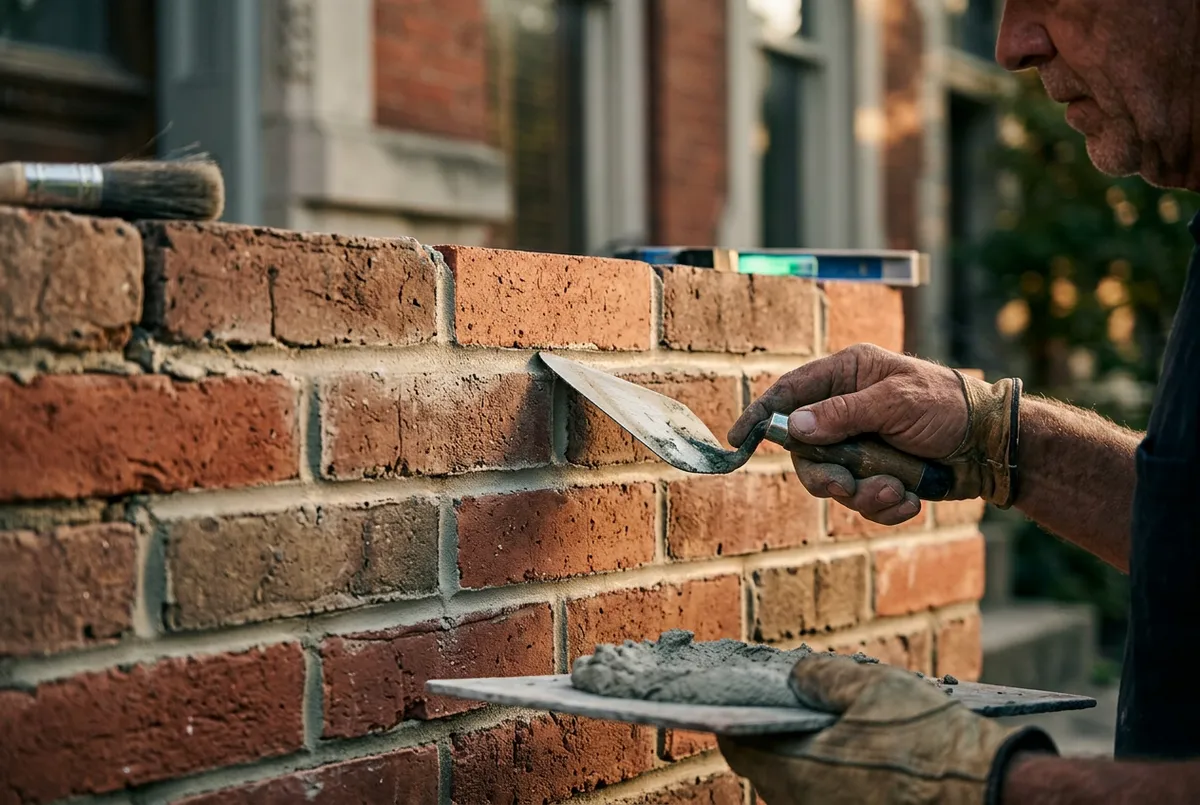
Brick Repair in Louisville
Restoring spalled, cracked, and settling exterior brickwork with period-matched salvaged units and accurate compressive load matching.
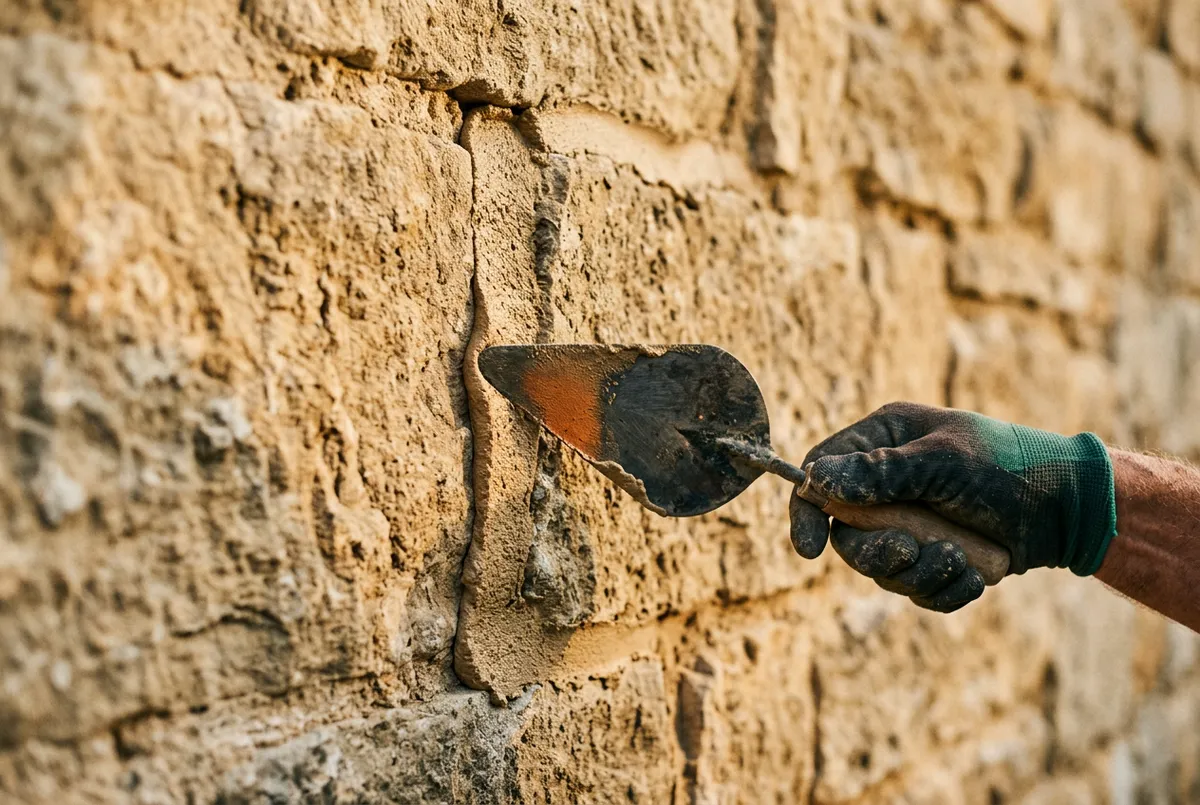
Tuckpointing & Repointing
Precision lime-based mortar formulation matching historic aggregate ratios to protect joints, preserve masonry walls, and prevent moisture penetration.
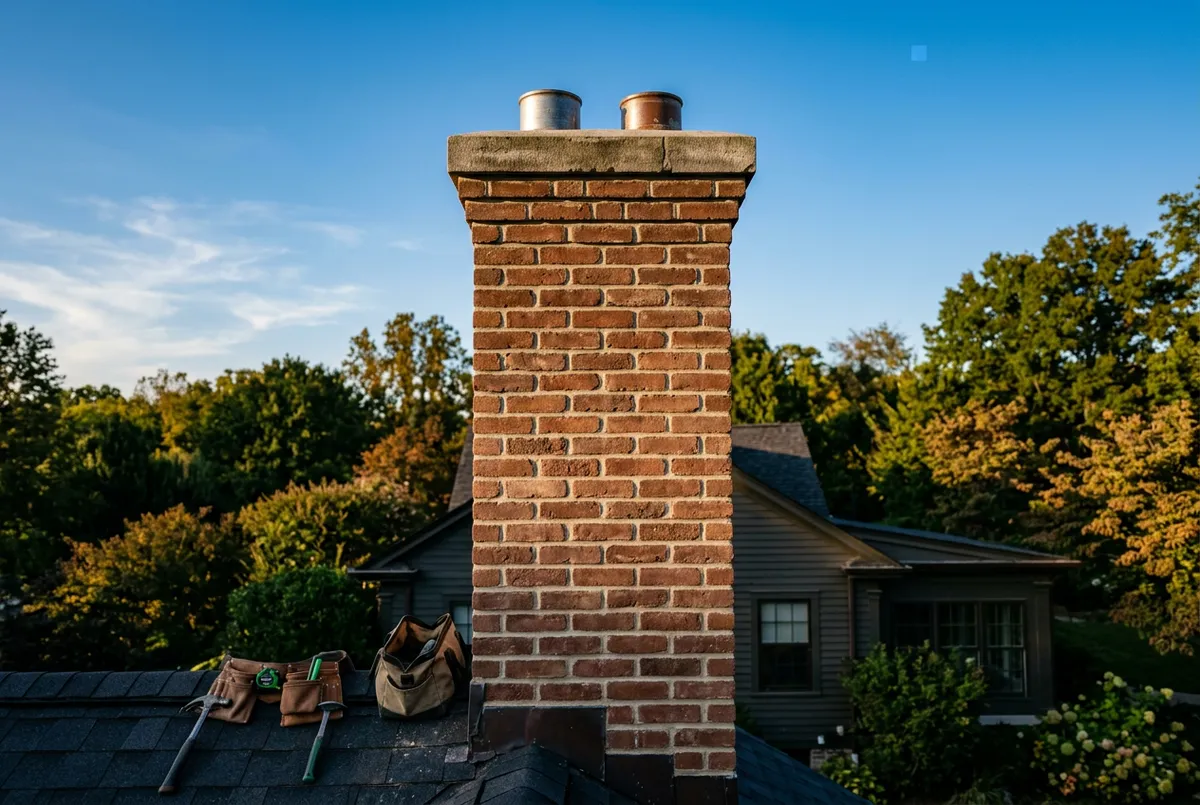
Chimney Masonry Repair
Rebuilding cracked wash crowns, spalling shoulders, and deteriorated flue masonry exposed to Ohio Valley seasonal freeze-thaw extremes.
HONEST ANSWERS & LOCAL GUIDANCE
Common Questions
About Masonry Repair
Clear, direct explanations regarding Ohio Valley weather stress, historic lime mortars, insurance realities, and long-term structural preservation.
How do Ohio Valley freeze-thaw cycles specifically damage local brick and stone?
Louisville experiences frequent temperature swings across the 32°F threshold throughout winter and early spring. When water penetrates hairline mortar voids or unsealed stone capillaries, it expands by approximately 9% upon freezing. This internal hydraulic pressure pops off brick faces (spalling), shears mortar bond lines, and accelerates structural deterioration far faster than steady cold climates.
How can I tell if a wall crack is cosmetic or structural?
Cosmetic hairline cracks typically follow individual mortar joints without displacing bricks or exceeding 1/16 inch in width. Structural concerns appear as stair-step fractures wider than 1/4 inch, horizontal shearing along foundation beds, outward wall bowing, or cracks that shear directly through solid brick units and limestone lintels. An on-site diagnostic exam determines the root cause.
Can you match historic lime mortar on 19th- and early 20th-century Louisville homes?
Yes. Historic properties in neighborhoods like Old Louisville, the Highlands, and Cherokee Triangle utilize soft, high-calcium lime and river sand mixtures. We formulate custom lime-sand ratios to match both the compressive softness and aggregate color profile of your original masonry, ensuring the wall can breathe and flex without fracturing historic brickwork.
What is the practical difference between tuckpointing and complete repointing?
Repointing is the structural process of grinding out deteriorated mortar to a depth of 1/2 to 3/4 inch and packing fresh, compatible mortar into the cavity. Tuckpointing is a specialized cosmetic finishing technique where a contrasting, fine ribbon of mortar is applied over the base joint to create the visual illusion of razor-sharp, uniform joints. We perform structural repointing on every restoration project.
Does homeowners insurance typically cover masonry repair or water infiltration?
Most standard policies cover sudden, accidental physical losses such as falling tree impact, vehicle collision, or storm-driven structural collapse. However, gradual deterioration caused by deferred maintenance, ground settlement, and long-term freeze-thaw water seepage is generally excluded. We supply detailed diagnostic photo documentation and formal estimates if you are filing a legitimate storm-related claim.
Why do chimney crowns and caps fail faster than vertical facade brick?
Chimney crowns sit fully exposed to rain, snow accumulation, thermal shock, and acidic combustion gases from the flue. Standard contractor-grade crowns are often poured too thin without drip edges, allowing pooling water to penetrate joints directly from the top down. We build reinforced, overhanging crowns with waterproof membranes to prevent premature chimney breakdown.
Why is applying modern Portland cement or silicone caulk over old mortar dangerous?
Modern Type S or Portland cement cures significantly harder than historic brick. When the building experiences thermal movement or moisture expansion, the rigid cement refuses to flex, transferring all stress directly into the softer brick face and causing irreversible spalling. Silicone caulk also traps subsurface moisture inside the wall cavity, drastically accelerating internal rot.
What weather conditions are required for masonry and mortar repairs?
Mortar requires temperatures consistently above 40°F to hydrate and cure without crystallizing or losing compressive bond strength. During colder shoulder seasons, we utilize specialized cold-weather enclosure techniques, heated sand and water, and insulated curing blankets to ensure that the chemical bond cures to full structural specification.
How are masonry repair estimates calculated?
Pricing is determined by the total linear footage of mortar joint failure, access requirements (scaffolding, lift clearance, or steep chimney pitches), structural brick replacement needs, and custom mortar formulation requirements. We provide upfront, transparent written diagnostic scopes with fixed line-item pricing before any physical work begins.
What warranty protection is provided on your restoration work?
All structural repointing, chimney rebuilds, and stone restorations include our multi-year craftsmanship and bond warranty. Because we analyze water intrusion sources and formulate chemically compatible mortar mixes rather than surface-patching symptoms, our repairs are engineered to endure decades of Kentucky weather.
LOUISVILLE MASONRY CARE
Don't Let A Small Crack
Become A Big Repair
Water intrusion and freeze-thaw cycles turn minor mortar voids into costly structural failures. Schedule an honest onsite diagnostic with Louisville's restoration masons today.
Direct mason assessment • No high-pressure sales • Fast turnaround across Greater Louisville
Authentic Kentucky limestone craft and structural masonry. Hand-laid retaining walls, dry-stack borders, and historic restorations built to endure generations across Greater Louisville.
Contact & Yard
Direct: (502) 706-4631
Location: Louisville, Kentucky 40204
Hours: Mon - Sat: 7:00 AM - 6:00 PM


©2026Derby City Stone & Masonry. All rights reserved. Licensed & Insured Kentucky Master Stonemasons.